In my free time I enjoy developing game concepts for paper and pencil RPGs. This is where I post things I create, or ideas I want to share.
An Old School Polish Sandbox
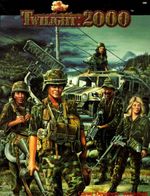
While I played first edition D&D back in the day, I was a SF fan and so pretty quickly moved on to Traveller, 2300AD, and other GDW games. In college I played in a friends Twilight: 2000, but it was in a gonzo modern campaign, and had nothing to do with the original game setting. So it wasn’t until fairly recently that I picked up T2K 1st ed. and its core modules to read for the first time. And I was surprised to discover that it is a classic sandbox game- but hampered by poor organization.
The original rules for Twilight: 2000 give an initial adventure called Escape from Kalisz, where it sets up the PCs are solders in WWIII cut off behind enemy lines. They have escaped a disastrous battle in the middle of Poland, and are on their own. Furthermore the game has established that all of Europe has been devastated by the war, so there is no law and order for hundreds of kilometers in any direction. They have limited information about their surroundings, and there are Soviet soldiers and marauders in all directions. It is a 'points of light' setting where the PCs are free to continue to fight for democrocy, or set themselves up as warlords themselves. The intro module does not have plot- just descriptions of the various villages and towns of central Poland in the vicinity of their starting point, and what kind of help or threats can be found there.
The PCs are not given an objective- they have some information about what is in their area- but there is no place they being directed to try to make it to, other than some rumors that Krakow is supposed to be safe. They are on their own to decide which direction to go, and how best to survive. But the first 5 modules published continued and completed the default campaign:
- Free City of Krakow – a freeform module that details Krakow and expands the sandbox south to the Czechoslovakian border.
- Pirates of the Vistula – a structured module that has the Party travelling to the northeast on the Vistula River to Warsaw. Details the towns along the river.
- The Ruins of Warsaw – a freeform module that details Warsaw and expands the sandbox to the east.
- The Black Madonna – a freeform module set in Silesia. Expands the sandbox to the South West, to the Czech/German Border
- Going Home – A structure module (although not as structured as the Pirates of the Vistula) that has the PCs trying to make it to a port in Germany to catch the last transport ship home to the USA. Expands the sandbox to the west, through Germany all the way to the French DMZ.
- Also issue 25 of Challenge magazine had an article titled The Baltic Coast: A Looter's Guide, which expanded the sandbox to the north, along the Baltic coastline.
(After Going Home, GDW began producing adventures set in North America, and gradually switched to more structure modules- which were more the preferred style by the late 1980s. Later modules returned to Europe and Poland, but did not return to the sandbox format.)
…So split between these publications, quite a bit of Poland was detailed with adventure hooks and threats. If the party chose to strike out into a random direction, the GM has plenty of information about what they would encounter.
The biggest stumbling blocks to this is that all this information is split up between multiple books, as well as the locations were not keyed except by the town name. So looking up polish location names in a map, and then hunting thought various books to see if that location has an entry was probably too unwieldy for most GMs.
My solution: I went through the laboured process of collating the sandbox information from the publications, and keying it to a hex grid overlaying the maps. Theoretically this would help a GM run a sandbox game set in Poland, since it would be much faster to look up a hex number to see if it has a description. I also made a more detailed handout for the players explaining the events leading up to the Escape for Kalisz adventure.
The Index:
- Eastern European Hexmap index - A compiled list of the sandbox content, keyed to the hexmap's hex numbers.
- Eastern European Hexmaps - The maps of Poland and German, with a numbered hex grid superimposed.
The player resources for Escape from Kalisz:
- Escape from Kalisz: The Death of a Division (Player Background for the start of the campaign)
- Final Intelligence Report player handout (re-laidout for clearer printing.)
These are provided solely as aids for GMs to improve their Twilight:2000 gaming.
Here are a couple of topo maps I think would be cool to have printed out and hand to Players. (note these are very large map files)
- Southern Poland Including Kalisz, Krakow, & Silesia
- Northern Poland including western USSR
- Germany & Denmark
Graphpaper & Hexmaps on the iPad
So playing around with my iPad, I went ahead and shelled out the $9 for Sketchbook Pro from Autocad, since it is a very full featured sketching app. One nice thing is that it supports a simple from of Photoshop layers. So I have been playing around with it to see how well it can be used for making game maps while I am waiting for the train, or sitting through a boring meeting. All you need to do is create your grid in a program like Illustrator and save it out as a PNG, with everything other then the lines set to be transparent. The images should be 1024x768. Here are a couple I made using illustrator:
Black lines:


Old-school cyan lines:


Just download them, and then transfer them into the iPad Photo Gallery somehow (I just emailed them to myself, and then opened the email on the ipad and saved it out there. But there is probably a smarter way to do it.)
You then open up Sketchbook Pro, and go into the layers flyout:
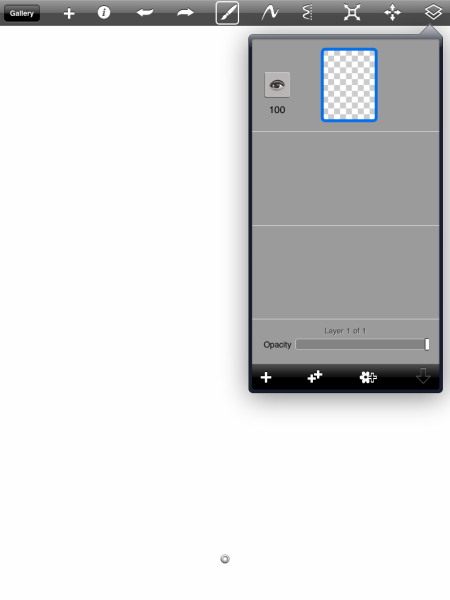
and then select the 'flower+' icon at the bottom to import the grid image from your photo library. (since they are transparent PNGs, the app shows them as solid black thumbnails, but they work fine.)
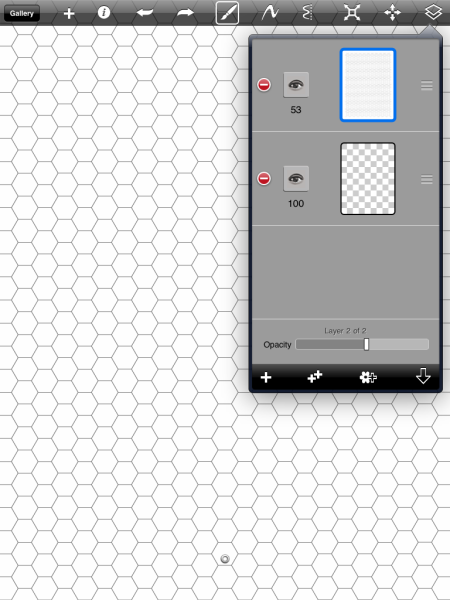
You then can create a new layer and put it behind the grid image layer. I also lowered the opacity of the grid layer to make it less intense. you then sketch on the layer(s) behind the layer with the grid image. the app supports upto 3 layers, so you can have the Grid on top, your background texture at the bottom, and then sketch out the dungeon or terrain features on the middle layer. i will try and post anything I make that comes out decent.
On may 28th, Autocad published an update to Sketchbook pro making the transparent PNGs less necessary - they added blend options to the layers in the app. So just like Photoshop you can take a scan of your favorite grid and place it in the top layer spot. and set its blend to Multiply. But these PNGs I created can be used, and then blend the layers differently to get other effects.